


Induction cooking uses electromagnetic energy to heat compatible cookware directly. That can make cooking faster, more precise, and more energy-efficient than gas or traditional electric cooking — with no open flame or hot coil.
This guide explains how induction works, what cookware you need, and step-by-step tips so you can cook with confidence. It also covers built-in hob basics, as many induction hobs are installed as built-in appliances.
Quick start: how to cook on an induction hob
- Check cookware: If a magnet sticks to the base of your pan, it’s likely induction-compatible.
- Place the pan first: Induction only works when compatible cookware is detected on the zone.
- Select the zone, then the heat level: Induction responds quickly, so make small adjustments as you cook.
- Watch residual heat: Many models show a residual heat indicator when the surface is still warm.
Induction hob basics: what it is and how it works
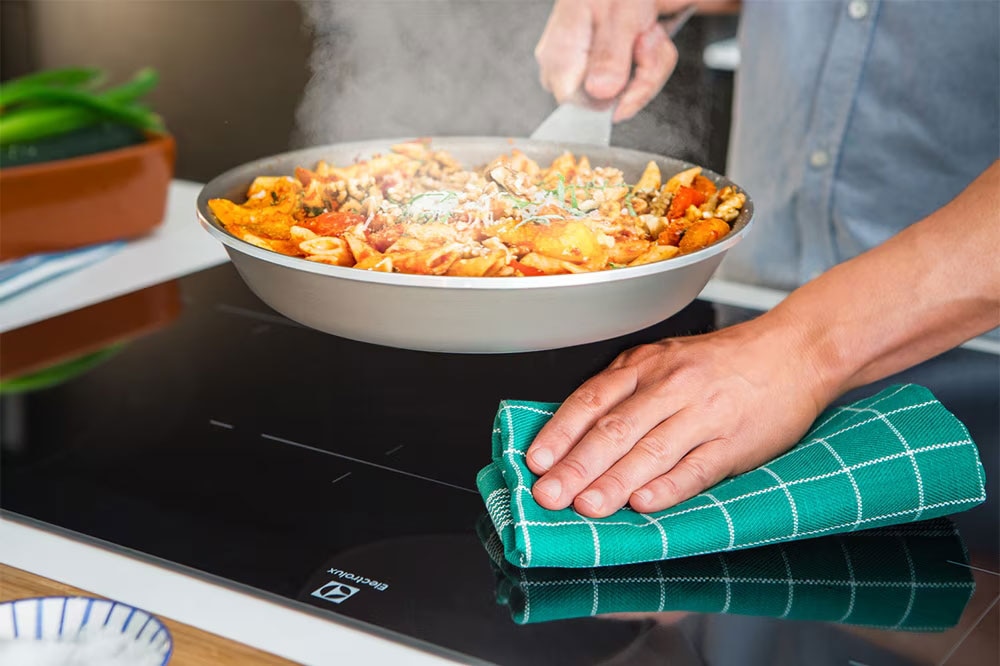
What is an induction hob
An induction hob is a modern cooking appliance that uses electromagnetic energy to heat cookware directly, offering faster, safer, and more efficient cooking compared to traditional gas or ceramic hobs.
What is a built-in hob
A built-in hob is installed into your kitchen worktop rather than sitting as a freestanding appliance. Many induction hobs are built-in, using the same core cooking method and controls.
If you’re choosing between hob types and sizes, the hobs buying guide can help.
How an induction hob works
Instead of generating heat through a flame or a heated coil, induction hobs use electromagnetic fields to heat your cookware directly. When a compatible pan (usually one with a magnetic base) is placed on the induction zone, energy transfers into the pan itself — making it the source of heat.
Why cook with an induction hob
Induction is highly efficient because heat is generated directly in the cookware, so very little energy is lost. It also offers precise temperature control, with adjustments that happen almost instantly.
Safety is another major benefit. Induction zones remain cool to the touch when no pan is present, and many models include features such as auto shut-off and child lock.
Induction hob features that help you cook better
Modern induction hobs can include features that improve control, convenience, and safety:
- Touch controls and digital displays: Intuitive touch panels allow accurate heat adjustments and easy cleaning. Digital displays show real-time settings and timers.
- Power boost functions: Temporarily increases power to a specific zone — useful for quickly boiling water or searing.
- Safety features: Auto shut-off, child locks, and residual heat indicators help prevent accidents and alert you when surfaces are still hot.
- Flexible cooking zones: Some induction hobs allow zones to be bridged or expanded for larger cookware.
Which cookware works on an induction hob
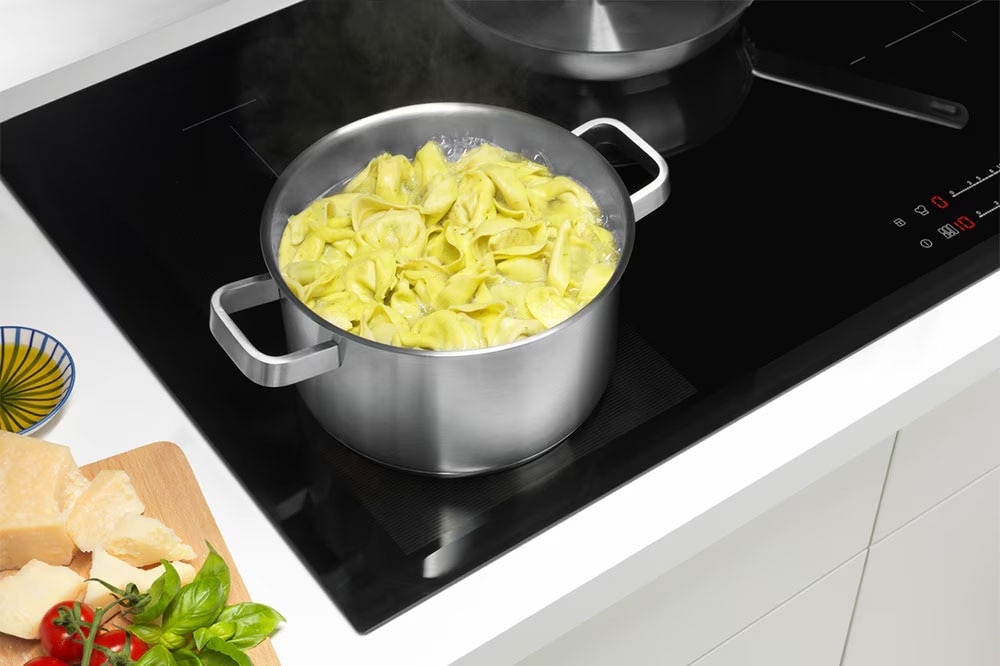
Induction cooking requires cookware made with magnetic materials. A simple test: if a magnet sticks to the bottom of your pan, it’s likely induction-compatible.
Standard aluminium or copper won’t work unless it has a magnetic base or is labelled “induction-ready”. Many modern non-stick pans are compatible if the base is magnetic — check the label or test with a magnet.
|
Cookware material |
Notes |
|---|---|
|
Cast iron |
Excellent heat retention and magnetic base—ideal for induction. |
|
Enameled steel |
Works well if base is magnetic; check for induction symbol. |
|
Stainless steel |
Only compatible if magnetic-grade steel is used. Use a magnet to test. |
|
Aluminum |
Standard aluminum won’t work unless labeled “induction-ready.” |
|
Copper |
Requires a magnetic layer or induction symbol to function properly. |
|
Non-stick pans |
Many are compatible if the base is magnetic—always check labeling. |
|
Glass/Ceramic |
Not compatible unless it has an induction-friendly base. |
Step-by-step: how to use an induction hob for everyday cooking
Using an induction hob is straightforward once you know the basics. Follow these steps from switching on to cleaning up:
1. Turn on the induction hob: Activate the hob using the power or touch-sensitive control panel. Many models show available cooking zones on a digital display.
2. Place cookware on the zone: Place a compatible pot or pan directly over the chosen cooking zone. If the hob doesn’t detect the pan, it won’t activate.
3. Select the zone and adjust the temperature: Choose the zone, then set the heat level. Use timers or power boost (if available) for fast heating.
4. Begin cooking: Cookware heats quickly, so you can start without delay. Adjust heat levels as needed — changes happen almost instantly.
5. Be aware of residual heat: Even if the surface is cooler than traditional hobs, it can retain some heat. Residual heat indicators help you know when it’s safe to touch or clean.
6. Clean after use: Allow the surface to cool, then wipe down with a soft cloth and gentle cleaner to maintain the finish.
Energy-saving tips when cooking with an induction hob
Induction hobs can be more energy-efficient than gas or traditional electric models. These habits can help you make the most of that efficiency:
- Match cookware to zone size: Pans that are too small or too large for the cooking zone can lead to uneven heating and wasted energy.
- Cook with lids on when possible: A well-fitting lid traps steam and heat, reducing cooking time and power use.
- Make use of residual heat: Switch off slightly before your food is done and let the remaining warmth finish the job.
- Use the right power level: High heat isn’t always needed. Medium or low settings help with simmering, reheating, or delicate sauces.
Should you switch to an induction hob
Switching to induction can transform your cooking experience with speed, precision, and energy savings. Many induction hobs include features such as power boost, residual heat indicators, power management, auto shut-off, child lock, timers, and touch controls.
If you’re weighing up fuel types, built-in gas hobs are another option to consider.
Explore Electrolux hobs for your kitchen
Explore our full range of Electrolux induction hobs or read our complete hobs buying guide to find the perfect match for your cooking style.


-
- SenseFry adjusts heat for even frying results.
- PowerBoost provides quick, intense heat.
- Flexi cut-out for easy kitchen installation.
-
- Select the bridge function to combine two zones.
- PowerBoost provides quick, intense heat.
- Induction is safe, fast, and energy efficient.
-
- ComboHob integrates hob and extractor fan.
- Bridging can create two larger cooking surfaces.
- Hob2Hood adjusts the extraction to your cooking.
For more kitchen advice and product information, visit Electrolux Singapore.
FAQs about how to cook with an induction hob
-
1. Can I use regular pans on my induction hob?
Not all pans are compatible. Cookware needs a magnetic base. If a magnet sticks to the bottom, it should work on an induction hob. Look for “induction-ready” labels for best results.
-
2. Is it dangerous to touch an induction hob while it’s on?
Induction is generally safer because the zone only heats when a compatible pan is present. The area under the pan can still become warm from residual heat, so check the residual heat indicator.
-
3. Why does my induction hob make noise when cooking?
Mild buzzing or clicking can be normal, especially at high settings or with lightweight or layered cookware. The sound can come from vibrations caused by the electromagnetic field.
-
4. How do I know when my induction hob is at the right temperature?
Induction responds quickly and many models use digital displays or preset levels. You can fine-tune heat as you cook, as adjustments take effect almost instantly.
-
5. What is a built-in hob, and does it change how I cook?
A built-in hob is installed into the worktop. Cooking steps are the same: use compatible cookware, select the zone, set heat, and follow residual heat and safety indicators.