


Buying the right clothes dryer isn't just about choosing a large or small capacity. You'll also want to weigh up installation space, ventilation, and how often your household does laundry. This guide walks through the most common tumble dryer types in Singapore and the key criteria to consider, so you can choose a dryer that fits your home with confidence.
Popular Types of Dryers Today
The market now offers several types of clothes dryers with different drying mechanisms and installation requirements. Understanding the characteristics of each type will help you narrow down your choice faster before moving on to the specific criteria in the next section.
Heat Pump Dryer
A heat pump dryer uses a vapour compression system to dry clothes. Air is warmed and passed through the drum to draw moisture out of the clothes, and the moisture is then condensed out of the air stream so it can be recycled and reused. Because it dries at a lower temperature than other types, a heat pump dryer offers better fabric protection and lower energy consumption.
| Pros | Cons |
|---|---|
|
|
Condenser Dryer
A condenser dryer uses a heating element to warm the drum and dry the clothing. Unlike a heat pump dryer, it doesn't recycle the warmed air; instead, it condenses moisture from the laundry into water, which collects in a container that needs to be emptied after use.
| Pros | Cons |
|---|---|
|
|
Venting Dryer
A venting dryer removes moisture by pushing hot, damp air outside the home through a hose, rather than collecting it as water. If you don't want to connect the hose to an external wall or window, the machine will need to sit in a well-ventilated, open area instead.
| Pros | Cons |
|---|---|
|
|
Read our detailed comparison on heatpump vs condenser vs vented dryers here to see which type fits your household best.
How to Choose the Right Dryer For Your Needs
Once you have a clear picture of the different dryer types, the next step is to pin down the specific criteria that suit your household. Below are the most important factors to consider before making a purchase.
Dryer Capacity
Clothes dryer capacity should be chosen based on the number of household members and how often the family does laundry:
- 8kg: Suitable for smaller households of 1 to 3 people with regular, mixed laundry loads.
- 9kg or more: Better suited to families of 4 or more, or households with frequent bedding, towels, and bulkier loads.
To put capacity into more everyday terms, an 8kg dryer can generally handle around 8 to 9 outfits or towels per load, while a 9kg model can dry up to 45 shirts or around 18 bath towels in one go, letting you dry more laundry in fewer cycles.
If you regularly dry bulky items such as duvets, bedding, or bath towels, sizing up is usually worth the extra cost.
Installation Location and Ventilation
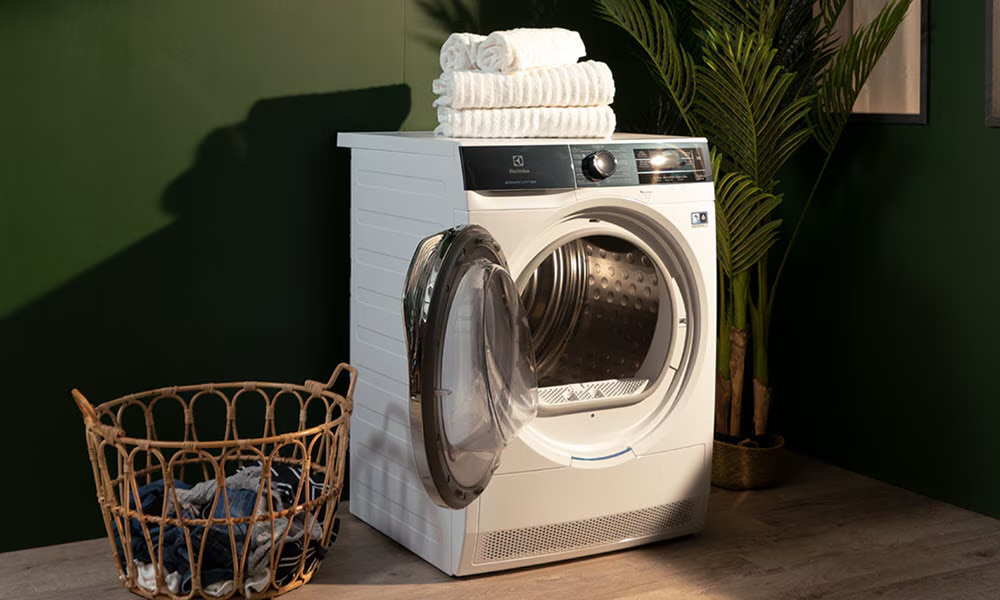
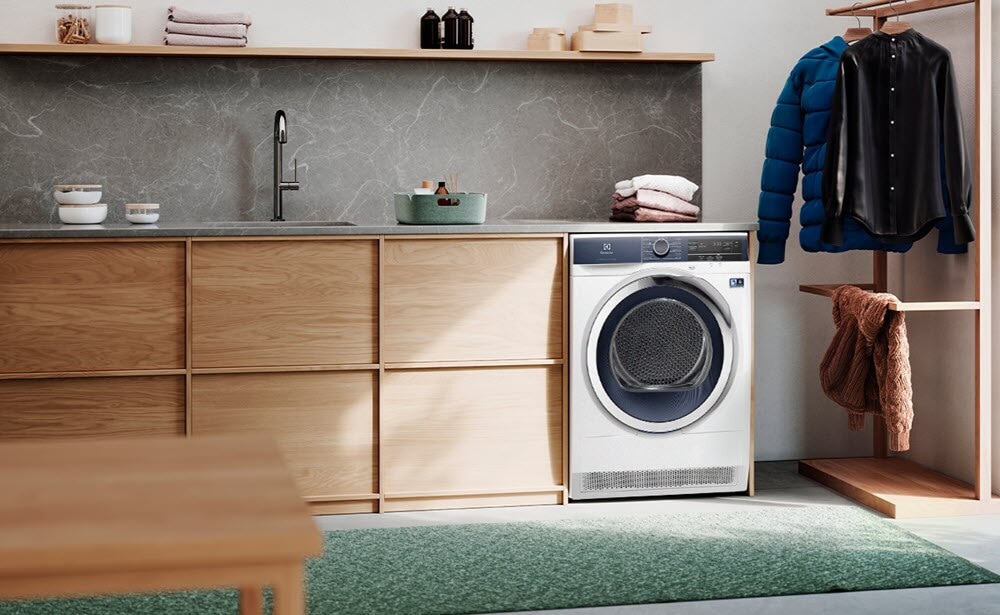
Measure the available space before buying, and check whether your unit has access to outside ventilation. If you live in an HDB flat or condo without a duct or external wall nearby, a heat pump or condenser dryer is usually the more practical choice, since neither requires venting to the outside.
If floor space is limited, most dryers can be stacked on top of a front-load washing machine using a stacking kit, or installed side by side for a matching look; note that not all dryer types can be wall-mounted, so check the product specifications if you're planning to mount rather than stack.
If your laundry area can't fit a separate washer and dryer at all, a washer dryer combo brings both functions into a single machine, though its drying capacity is usually lower than a standalone clothes dryer.
Features and Settings
Beyond the basic criteria, the features below will shape your day-to-day experience using the dryer:
- Quick 30-minute cycle: Lets you dry smaller loads of everyday fabrics, cotton, or blended fabrics quickly, ideal when you need a load done in a hurry while saving energy.
- Intelligent sensors: Automatically measure the dryness of clothes during the cycle and adjust drying time accordingly, reducing wear and preventing over-drying.
- Wool-safe cycle: A Woolmark-approved programme ensures tumble-dryer-safe woollen garments are dried safely without shrinking or losing shape.
- Reduced wrinkling: Alternating drum movements stop clothes from tangling and can reduce wrinkles by up to a third compared with hang-drying, making ironing quicker afterwards.
- Colour protection: A dedicated colour-care setting can reduce fading by up to 80% compared with hang-drying in the sun, helping clothes last longer.
- App connectivity: Selected models let you monitor drying progress, get end-of-cycle notifications, and track energy use from your phone, useful if you want to start a load and get on with your day.
Noise Level
A clothes dryer can be fairly loud, since it has a spinning motor, drum, and exhaust fan all running at once. Consider where the dryer will sit relative to bedrooms, a home office, or a child's study area, and check the decibel rating on the spec sheet if noise is a concern. Where possible, ask to hear a demo unit in-store before deciding.
Energy Efficiency and Running Cost
Dryers are among the more power-hungry appliances in a home, so it's worth comparing energy consumption specs across models before deciding. Heat pump dryers generally use less electricity than condenser or venting types, which can add up to meaningful savings if you do laundry several times a week.
Trusted Brand and Warranty Policy
A clothes dryer is a long-term household appliance, so it's worth prioritising a brand with a clear warranty policy and reliable after-sales service. Warranty duration, motor coverage, and how quickly a technician can attend to a breakdown are all worth checking before you commit, especially for an appliance you'll rely on several times a week.
If you're looking for a brand that meets all the criteria above, Electrolux offers heat pump dryers in 8kg and 9kg capacities, along with a 2-year general warranty and a 10-year motor warranty on selected models in Singapore. Here are a few models worth checking out to compare capacity, features, and price for your household's needs:

-
- Perfectly dries down jackets and duvets.
- Gently dry even the most delicate items.
- Dries effectively using 60% less energy.
-
- Smart sensors protect clothes from overdrying.
- Dries effectively using 60% less energy.
- Removes 99.9% of common certain bacteria and viruses.
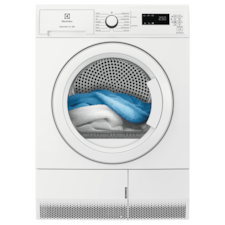
-
- Heat Pump protects fabrics using 50% less energy*.
- ReverseTumbling reduces wrinkles up to 1/3*.
- Sensors adjust cycles to reduce wear and tear.
Dryer products that meet Electrolux's terms and conditions are covered by a 2-year general warranty in Singapore, with select models carrying a 10-year motor warranty. You can view the details of Electrolux's warranty terms and conditions or register your warranty online to schedule a repair at a time that suits you.
The right dryer helps you save time on laundry day and keeps your fabrics in better condition for longer. If you're still deciding between a heat pump, condenser, or venting dryer, or wondering whether a washer dryer combo makes more sense for your space, our support team is ready to help you find the product that best matches your household's needs.
Frequently Asked Questions
-
Which type of clothes dryer is best for a small HDB flat or condo without a yard?
A heat pump or condenser dryer is usually the better fit, since neither needs a vent hose connected to an external wall or window. Both can be installed in a kitchen, yard, or enclosed utility space, making them practical options where outside ventilation isn't available.
-
How much capacity do I need for a family of 4?
For a household of about 4 people, a 9kg or larger dryer is usually the better fit, especially if you frequently dry bedding, towels, or bulkier items. This capacity lets you dry more laundry in fewer cycles compared with an 8kg model.
-
What's the difference between a heat pump dryer and a condenser dryer?
Both types condense moisture rather than venting it outside, but a heat pump dryer recycles the warmed air to dry at a lower temperature, using less energy and being gentler on fabrics. A condenser dryer uses a heating element without recycling the air, so it usually dries faster but consumes more electricity.
-
Is a heat pump dryer worth the extra cost?
If you do laundry frequently or dry a mix of delicate and everyday fabrics, the lower running costs and gentler drying temperature of a heat pump dryer can make up for the higher upfront price over time. For occasional use, a condenser or venting dryer may be the more economical choice.
-
Do I need to install a vent for my dryer?
Only if you choose a venting dryer, which requires a hose connected to an external wall, window, or duct. Heat pump and condenser dryers don't need external venting, since they collect moisture as water inside the machine instead.
For more answers, visit our Dryer FAQs or our support page.