


Are you looking to breathe easier at home? Whether you're dealing with haze season, allergies, or everyday dust, the right air purifier can transform your indoor air quality by combining effective filtration, convenience, and peace of mind.
Read our air purifier buying guide to find the ideal match for your home.
1. Types of air purifiers
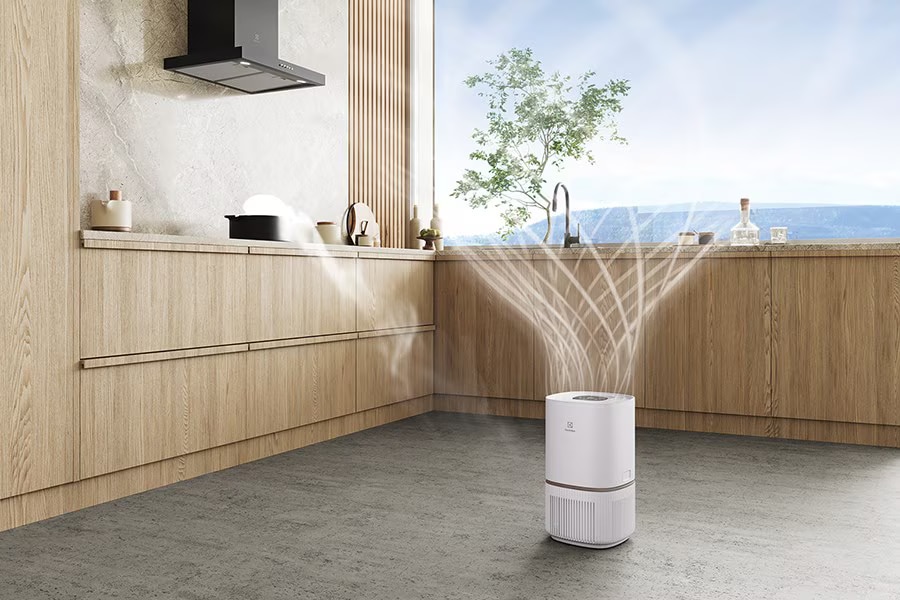
The market offers various types of air purifiers, each using different filtration technology to tackle different air quality concerns. Understanding their unique features and benefits will help you select the perfect fit for your home.
True HEPA filters
True HEPA (High-Efficiency Particulate Air) filters remain the gold standard for air purification. They capture at least 99.95% of particles as small as 0.3 microns, including dust, pollen, PM2.5 haze particles, and pet dander, making them a versatile option for most households.
Activated carbon filters
Activated carbon filters use a porous material to absorb gases, odours, and smoke rather than solid particles. They are often paired with a HEPA filter for more complete filtration, and are especially useful for kitchens, smokers' homes, and pet owners.
Ionisers and negative ion technology
Ionisers release charged particles that cause airborne pollutants to clump together and settle out of the air. They can be a helpful addition to a purifier's filtration, but look for models certified as low-ozone or ozone-free, as some ionisers can produce trace ozone as a by-product.
UV-C sterilisation
UV-C light is used in some air purifiers to neutralise airborne bacteria and viruses. It's most effective when paired with adequate airflow and dwell time, and works best as a complement to HEPA filtration rather than a replacement for it.
Choosing the right air purifier often depends on your main air quality concern. Here is a quick comparison:
| Feature | True HEPA filter | Activated carbon filter | Ioniser |
|---|---|---|---|
|
Best for |
Fine particles, PM2.5, allergens |
Odours, smoke, fumes |
Very fine particles, light odours |
|
Maintenance |
Filter replacement every 6–12 months |
Filter replacement, often more frequent |
Minimal, but check for ozone certification |
|
Standalone use |
Yes, effective on its own |
Best combined with HEPA |
Best as a supplementary feature |
2. What to consider when buying an air purifier
Selecting the ideal air purifier involves more than just picking a filter type. Detailed consideration of factors like room coverage, air changes per hour, and your household's specific air quality needs will ensure you make the right choice.
Room coverage
Room coverage and airflow are among the most critical factors when choosing an air purifier. An undersized unit will struggle to keep up in a large room, while an oversized one is an unnecessary expense for a small space. Below is a guide to help you select the best option:
| Room size | Recommended coverage |
|---|---|
|
Small (bedroom, study, ~10–15m²) |
Up to 20m² |
|
Medium (living room, ~15–30m²) |
20m² – 40m² |
|
Large (open-plan living-dining, ~30m²+) |
40m²+, or consider more than one unit |
If you live in an open-concept HDB flat or condo where the kitchen, living, and dining areas connect, treat it as one larger space and size up rather than down, an open floor plan behaves like a bigger room than its individual sections suggest.
CADR and air changes per hour (ACH)
CADR (Clean Air Delivery Rate) measures how much clean air an air purifier delivers per hour at its highest speed setting. The higher the CADR, the faster it can clean a given room. As a rule of thumb, look for a unit that can refresh the air in your room around 4–5 times an hour (its air changes per hour, or ACH). During haze season or for households with allergy sufferers, err on the side of a higher CADR rather than the minimum recommended for your room size.
Matching filtration to your air quality needs
Your choice of air purifier should also match the air quality issue you're most concerned about, and who's living in the home:
- Haze and PM2.5: A True HEPA filter with a high CADR, run continuously on auto mode when outdoor air quality drops.
- Allergies and dust: A True HEPA filter, ideally with a pre-filter to extend its lifespan.
- Pets: A combination HEPA and activated carbon filter tackles both fur/dander and pet odours.
- Cooking smells and smoke: An activated carbon filter is most effective, placed closer to the kitchen.
- Mould and musty odours: An activated carbon filter and good air circulation; a dehumidifier can be a helpful complement.
- Children and nurseries: A quieter model with a night mode so it can run through the night without disrupting sleep.
3. Other considerations
In addition to the primary factors, a few extra details can further refine your decision-making process.
- Noise level: Air purifiers are meant to run for long stretches, so check the decibel (dB) rating, especially for bedrooms or nurseries. Look for models that operate quietly on lower fan speeds, ideally under 30dB for overnight use.
- Smart features: Many modern air purifiers include a PM2.5 sensor with real-time display, an auto mode that adjusts fan speed to current air quality, app control, and a filter-change indicator so you know exactly when to replace filters.
- Cost of ownership: HEPA filters typically need replacing every 6–12 months, and activated carbon filters more frequently. Also consider the unit's power consumption if it runs continuously.
4. Why should you choose Electrolux air purifiers
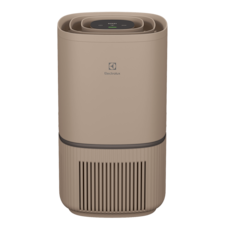
Electrolux air purifiers are designed to enhance your home's air quality with minimal effort. The UltimateHome 300 air purifier, for example, uses a 4-stage filter with PureProtect technology to reduce a broad range of airborne substances, while its AirSurround design is built to purify a 30m² room in as little as 15 minutes* — useful during haze season when you want the air to clear quickly. At a barely perceptible 19dBA on its quietest setting, it's also suited to bedrooms and nurseries.
*Based on internal testing; actual results may vary by room conditions.
Additionally, Electrolux provides exceptional after-sales support, ensuring your investment is protected for years to come. Our warranties and dedicated service teams give you peace of mind, so you can focus on breathing easier at home.
Discover our range of air purifiers today and experience cleaner, fresher air with minimal effort.
-
- PureProtect reduces harmful airborne substances¹.
- Low, barely perceptible 19dBA noise level.
- AirSurround purifies room air in just 15 minutes¹.
5. Air purifier FAQs
-
1. Do air purifiers really help during haze season in Singapore?
Yes. A True HEPA filter is designed to capture PM2.5, the fine particulate matter found in haze, provided the unit is correctly sized for your room and run continuously with windows and doors closed.
-
2. What size air purifier do I need for my HDB flat?
Match the purifier's rated coverage to your room size, and size up for open-plan layouts where the kitchen, living, and dining areas connect, since they behave as one larger space.
-
3. How often should I replace my air purifier filter?
Check manufacturer recommendations, but True HEPA filters typically need replacement every 6–12 months, while activated carbon filters may need changing more frequently.
-
4. Do air purifiers produce ozone?
Some ionising air purifiers can produce trace ozone as a by-product. Look for models that are certified as low-ozone or ozone-free if this is a concern.
-
5. Can I run my air purifier all day?
Yes, most air purifiers are designed for continuous use, which is especially recommended during haze season or allergy flare-ups. Just remember to check and replace filters on schedule.